

SLAAM Engineering Summer Academy
SLAAM (Student Learning and Achievement Aerospace and Mechanical) is a non-residential summer program aimed at academically talented and motivated high school students.
Summer 2026 Session
July 6 - July 17, 2026 | 9 am - 4:30 pm
Rutgers University School of Engineering
Busch Campus, Piscataway
Cost: $875 for the two-week session
The program includes a research project every morning and SLAAM group projects in the afternoon. Students are required to bring a Windows laptop (please email the coordinator if you need assistance).

What is SLAAM?
SLAAM provides opportunities for students to pursue their intellectual curiosity and meet others who share their engineering interests and abilities.
SLAAM is a selective program for high-achieving high school students who wish to engage in science and engineering research at Rutgers.
SLAAM focuses on research and applied work within the Mechanical and Aerospace Engineering Department.
SLAAM fellows participate in supervised research and learning experiences developed and taught by Rutgers Engineering faculty and graduate student mentors.

Selection Criteria and Important Dates
-
The following information is required for admission:
- GPA
- Transcript of Courses/Report Card
- Essay Responses
- Letters of Recommendation – Math and Science/Engineering Teachers
-
Applications due May 1, 2026, 6:00 PM Eastern Standard Time
Applicants notified of selection by May 18, 2026
Acceptance or Declination of participation response by May 24, 2026
Receipt for payment due by June 7, 2026 (will send out details after May 24, 2026)***Incomplete applications will not be reviewed***
-
- 8th grade entering 9th in the fall term
- 9th grade entering 10th in the fall term
- 10th grade entering 11th in the fall term
- 11th grade entering 12th in the fall term
- 12th grade - graduating senior this term
SLAAM 2026 Projects
Students will participate in dynamic hands-on projects led by School of Engineering professors from the Department of Mechanical and Aerospace Engineering.
Accordion Content
-
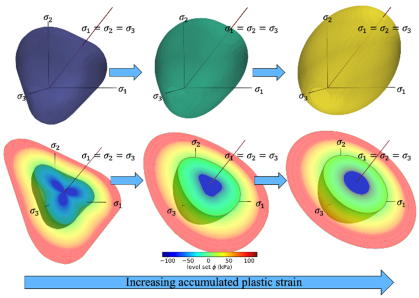
This project introduces students to how generative artificial intelligence can be used for engineering design. Students will learn how image-based generative AI models can be adapted to create structural geometries that satisfy performance targets such as prescribed deformation, stiffness, and stress limits. They will run guided experiments where they generate candidate designs and evaluate them using engineering simulations. The project exposes students to modern computational engineering workflows that combine physics-based reasoning and AI methods. Basic familiarity with Python is helpful but not required.
Dr. Nikolaos Vlassis
-
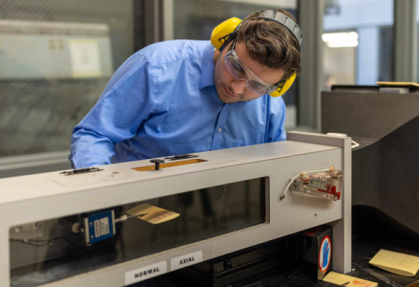
Students will be required to measure the lift and drag on a set of NACA airfoils using the airfoil wind tunnel. Experimental results will be compared to theoretical solutions from thin airfoil theory. In addition, we will discuss the physics behind how the airfoil works.
Dr. Edward DeMauro
-

Students will explore airflow around a missile traveling at hypersonic speeds. Starting from a 3-D computer-aided design (CAD) model, students will learn how engineers generate computational meshes and run physics-based simulations to compute the flow field around the missile body. We will begin with a simplified (inviscid) simulation and then move onto a more realistic case that includes air friction effects. Students will visualize shock waves, Mach number and pressure distributions using professional aerospace engineering tools. This project introduces the complete engineering workflow used in real-world aerospace research, both in industry and academic settings - from geometry creation to post-processing and analysis.
Dr. Doyle Knight
-

Students will learn to code, animate, and solve mechanical engineering systems, e.g. 2D robots, rocket launch, truss etc., from scratch. No coding experience is required; the basics of Python programming language and AI-assisted coding will be taught during the first sessions. Students will also be introduced to the underlying physics behind mechanical systems. If we have time, we will develop a physics-based 2-D game.
Dr. Assimina Pelegri
-
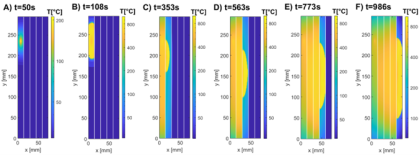
Students will use multi-physics simulations in the software package COMSOL to solve the coupled heat transfer and chemical kinetics of thermal runaway in Li-ion battery cells. Specifically, the students will learn how to set up a transient heat transfer simulation, how to define spatiotemporal functions of heat generation rate within the battery cells, and how to simulate the thermal runaway process in a single cell. Next, students will extend their single-cell model to a multi-cell battery module and simulate the process of cascading thermal runaway and propose methods to suppress the cascading effect.
Dr. Amin Reihani
-
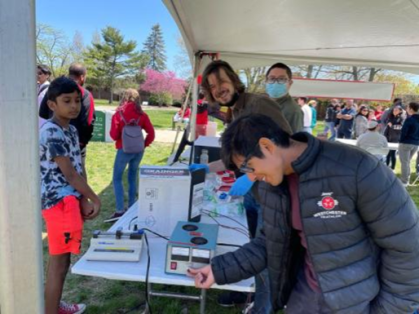
Edible Nano coatings: Our lab has recently developed a water-only means of electrostatic spray that enables a wide range of healthcare and delicious applications. Students will try to answer the question: do nanostructured coatings taste different from smooth coatings? They will do this with a variety of flavored molecules. (PLEASE ENSURE YOUR STUDENT DOES NOT HAVE SEVERE ALLERGIES TO FOOD, PLEASE CONTACT THE COORDINATOR ABOVE IF YOU ARE INTERESTED IN THIS PROJECT AND YOU WANT TO CHECK THEIR ALLERGIES WITH US)
Dr. Jonathan Singer
-

This project focuses on the development and physical implementation of advanced offensive and defensive maneuvers for an Autonomous Foosball Table (AFT). While previous iterations relied heavily on 2D physics simulations to inform logic, this program will challenge students to program and execute strategies directly on the physical hardware. Students will leverage a system utilizing stepper and servo motors for lateral and rotational rod control, integrated with real-time computer vision for ball tracking. The core objective is to move beyond basic "kick and run" behaviors to a sophisticated, physically realized playbook including: Offensive Execution - Developing C++ and Python-based control logic for complex shots such as the snake shot, push/pull shots, and coordinated lateral passing, Dynamic Defense - Programming reactive blocking algorithms that utilize predictive ball trajectory data to position figures effectively, Strategic Integration - Mapping out a high-level decision-making hierarchy that determines when to trap, pass, or shoot based on live field conditions. By focusing on physical trials, students will address real-world robotics challenges such as motor latency, mechanical bottlenecks, and environmental noise in computer vision. This project provides a tangible testbed for mastering multi-agent coordination and high-speed robotic manipulation.
Dr. Stephen Tse
Questions?
Jesse Hubler (SLAAM Coordinator)
jlh419@soe.rutgers.edu
(848) 445-3666